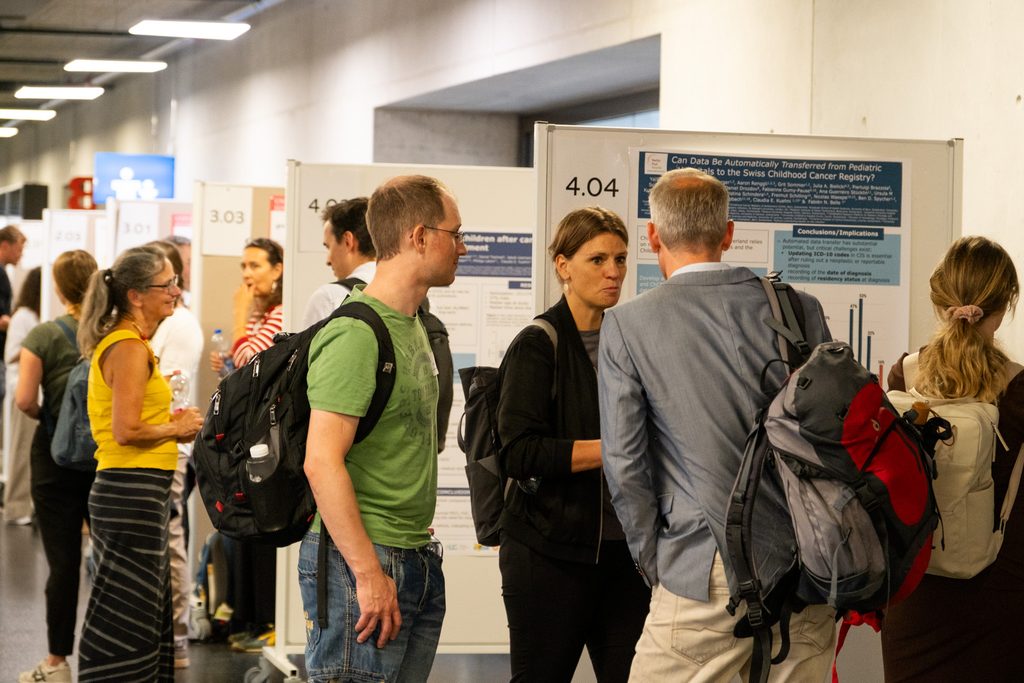
On the weekend of August 21 and 22, 2026, we celebrated the 50th anniversary of the Swiss Childhood Cancer Registry with a symposium at the University of Bern.
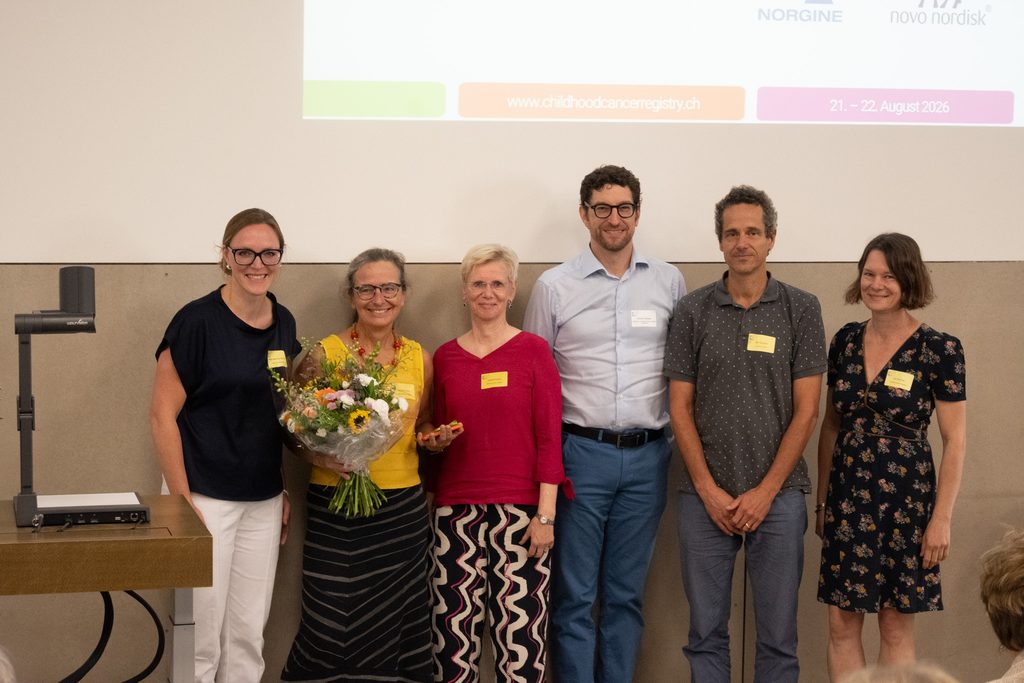
From left to right: Fabiën Belle-van Sprundel, Claudia Kuehni, Urusla Kühnel, Nicolas Waespe, Ben Spycher, Grit Sommer
We were pleased to welcome numerous national and international experts from clinics, registries, and follow-up care research. Representatives from politics and foundations, patient advocates, and many other guests were also in attendance.
A heartfelt thank you to all the wonderful speakers and to our engaged audience, who celebrated this special occasion with us!
Lots of new insights and perspectives were shared through the presentations. These contributions will help all stakeholders to make their work even more aligned with the needs of those affected.
Here are a few highlights from the two eventful days:
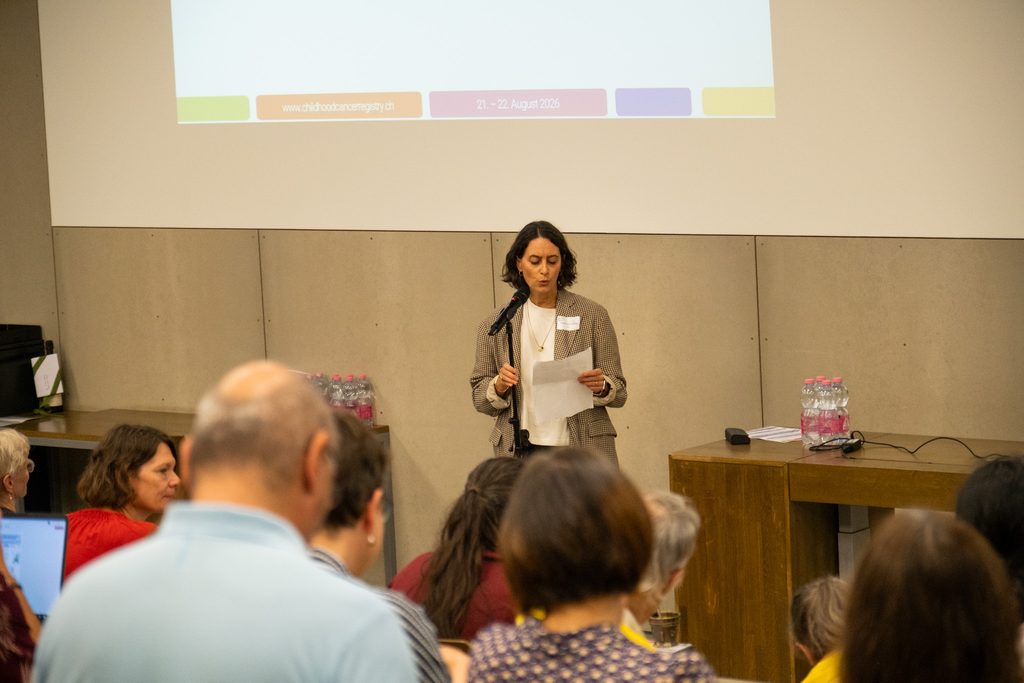
Angèle Gayet-Ageron
In the first session, Nicolas von der Weid and Claudia Kuehni guided us through the history of childhood cancer registration in Switzerland. Marina Haller, Friederike Erdmann, Fabiën Belle-van Sprundel, and other researchers gave presentations on a wide range of topics that can be investigated using registry data: from long-term health and psychosocial consequences to cancer predisposition, as well as differences in survival, data quality, and completeness. In addition, PhD students gave flash talks on their posters, which were later discussed.
In the afternoon, the focus turned to two key questions: What role does the environment play in childhood cancers? And how can registry data and research help us understand potential risk factors? Stéphanie Goujon and Aurélie Danjou focused on findings related to environmental exposures and agricultural factors, Ben Spycher addressed proximity to nuclear power plants, and Catherine Metayer spoke about PFAS exposure.
We then turned our attention to the future of childhood cancer registries. While Katrin Scheinemann and Claudia Kuehni explained the registry and research perspectives, Paul Castle shared the perspectives of patients and families.
The day concluded with a panel discussion featuring perspectives from public health, clinical care, research, and patient advocacy. A fitting conclusion: We looked back, discussed current issues, and reflected together on the future.
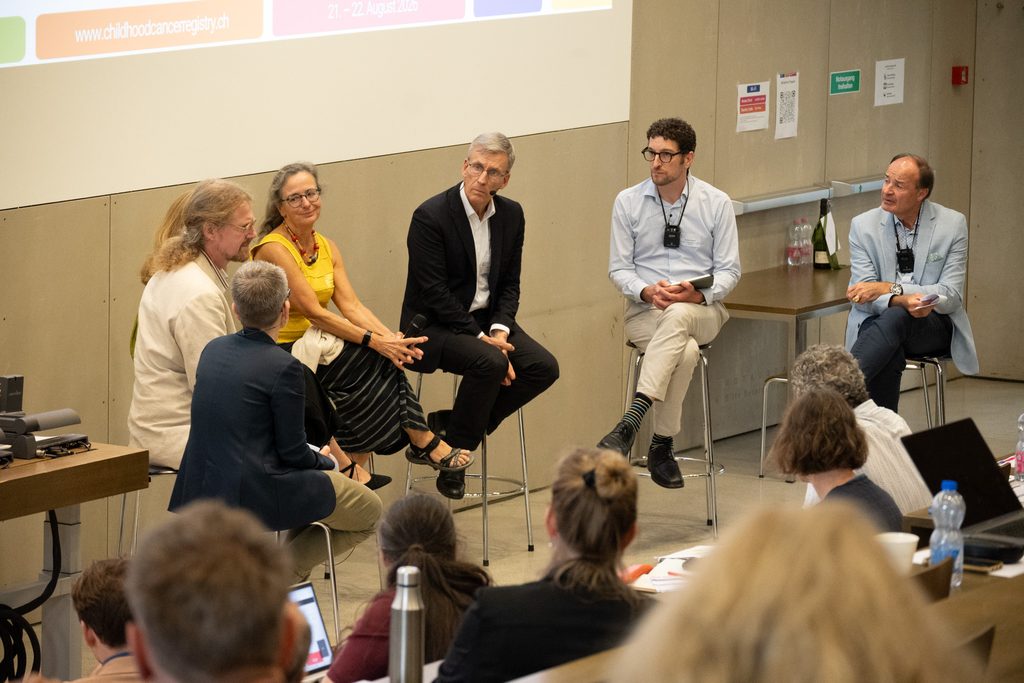
From left to right: Katrin Scheinemann, Rhoikos Furtwängler, Petra Baeriswyl, Claudia Kuehni, Paul Castle, Nicolas Waespe, Nicolas von der Weid
On the second day, the focus was on two closely related topics: What can new data on childhood cancers tell us? And how can we improve life after cancer?
In the morning, we explored the possibilities of genetic predisposition, biobanks, omics, and new therapeutic approaches, and then turned our attention to life after cancer. Insightful contributions came from Nicolas Waespe, Kevin Oeffinger, Raffaele Renella, and Jean-Pierre Bourquin, among others. The importance of registry data, early detection, prevention, and psychosocial aspects for the long-term health of children with cancer was highlighted by Severin Fankhauser and Gisela Michel, among others.
Many thanks to everyone who joined us and demonstrated how high-quality data can improve cancer care as a whole!
You can find more information about the event in our LinkedIn posts.